SpaceX Hits 10,000 Starlink Satellites — And Raptor 3 Changes the Game
SpaceX has crossed 10,000 Starlink satellites in orbit while the Raptor 3 engine redefines what manufacturing at scale looks like for space infrastructure.
By TSS Team
A Constellation Like No Other
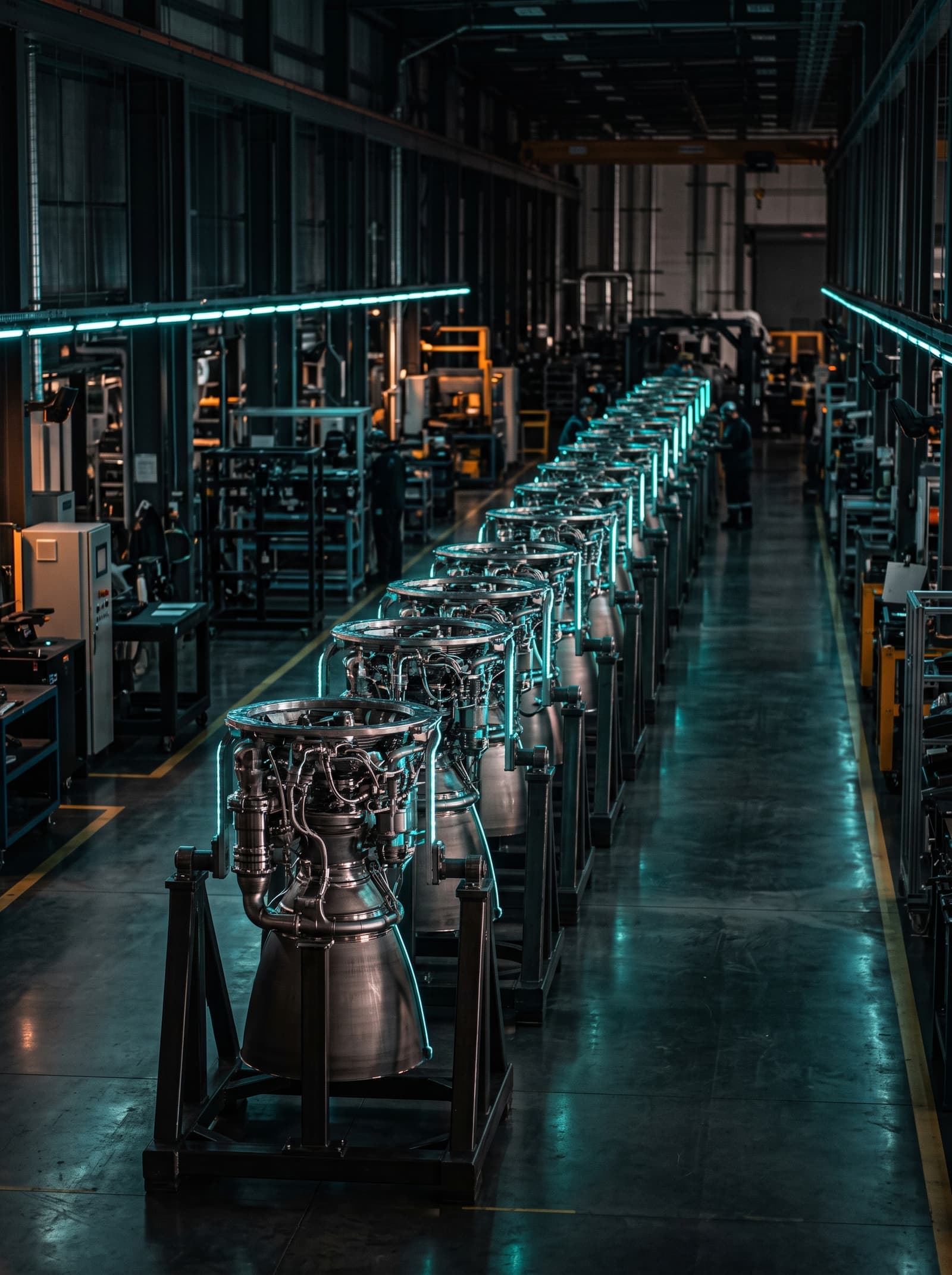
In March 2026, SpaceX quietly crossed a milestone that would have been unthinkable a decade ago: 10,000 operational Starlink satellites in low Earth orbit. That number alone is staggering — it represents more than half of all active satellites currently orbiting the planet, operated by a single private company. But the number only tells part of the story. The real achievement is the manufacturing system behind it. SpaceX is not launching satellites one at a time; it is producing them on what can only be described as an automotive-style assembly line in Redmond, Washington. At peak output, the company has demonstrated the ability to manufacture multiple satellites per day — a pace that legacy aerospace contractors would consider impossible. Each Starlink satellite is designed for a limited operational life, which means SpaceX must continuously produce and launch replacements. This creates a manufacturing flywheel that drives costs down with every iteration, a dynamic that is fundamentally different from the bespoke, one-off production models that have defined the space industry for decades. For engineers and infrastructure planners watching from the outside, the lesson is not about satellites — it is about what happens when manufacturing discipline meets ambitious engineering at planetary scale.
Raptor 3: Engineering Without Compromise
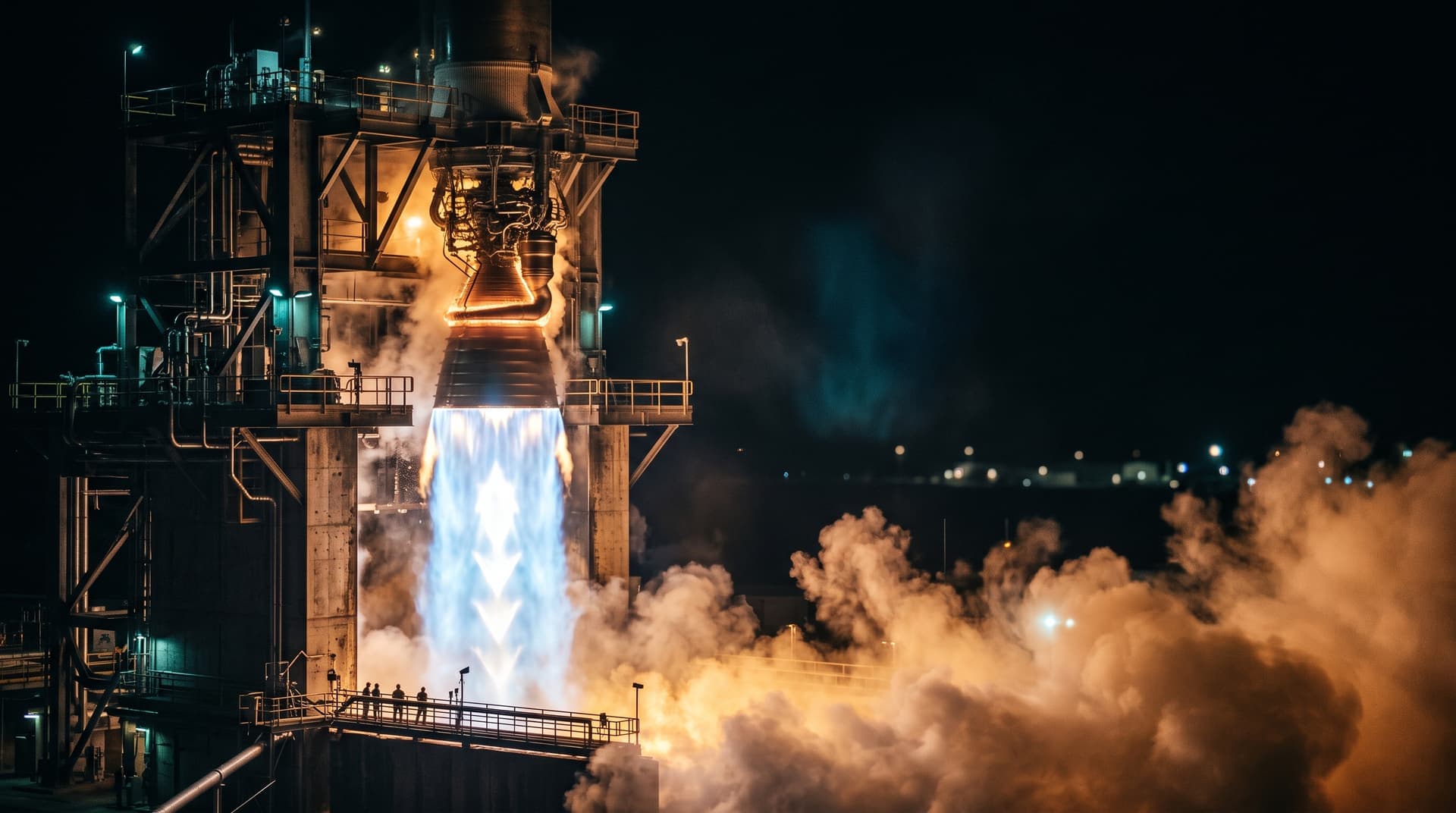
While Starlink dominates the payload side of SpaceX's operations, the Raptor 3 engine is quietly revolutionizing the propulsion side. The third generation of SpaceX's full-flow staged combustion engine, Raptor 3 represents a radical simplification of one of the most complex machines in aerospace. Compared to its predecessors, Raptor 3 has fewer parts, a simplified plumbing architecture, and a significantly higher thrust-to-weight ratio. SpaceX achieved this by rethinking fundamental design assumptions — eliminating components that traditional engine designers considered essential, and replacing complex assemblies with integrated, additively manufactured structures. The engine generates over 280 tonnes of thrust, making it one of the most powerful rocket engines ever built, while simultaneously being easier and faster to produce. For the Starship super heavy booster, which uses 33 Raptor engines, manufacturing speed is not a luxury — it is a requirement. SpaceX needs to produce hundreds of these engines per year to support its launch cadence. Raptor 3's design reflects this reality: every engineering decision was made not just for performance, but for manufacturability. This is a mindset that the broader engineering world — including structural and infrastructure engineering — would benefit enormously from adopting.

Manufacturing at Scale: The SpaceX Doctrine
The most transferable lesson from SpaceX's approach is not any single technology — it is the philosophy of manufacturing at scale. Traditional aerospace operates on the premise that every component is precious, every unit is custom, and every process is artisanal. SpaceX has inverted this. Their approach treats hardware as software: iterate rapidly, test aggressively, accept controlled failures, and optimize relentlessly for production volume. This philosophy has direct parallels in infrastructure. India, for example, plans to build tens of thousands of kilometers of highways, hundreds of bridges, and millions of housing units over the next decade. The question is whether these will be built using approaches from the 1990s — or whether India can develop its own version of manufacturing-at-scale thinking for infrastructure. Prefabricated construction, modular building systems, and standardized structural components all represent opportunities to apply SpaceX-style manufacturing discipline to civil engineering. The organizations that figure this out will deliver infrastructure faster, cheaper, and at higher quality than those that continue to treat every project as a one-off endeavor.
What This Means for India's Space and Infrastructure Ambitions
India's space program, led by ISRO, has achieved remarkable milestones — from the Mars Orbiter Mission to the Chandrayaan-3 lunar landing. But India's approach to space hardware manufacturing remains largely traditional: small batches, long production cycles, and limited reusability. SpaceX's model suggests an alternative path. If India wants to build its own satellite constellations — whether for communications, Earth observation, or defense — it will need to develop manufacturing capabilities that can produce hardware at rates measured in units per week, not units per year. This applies beyond space. India's defense sector, its construction industry, and its infrastructure development programs all face the same fundamental challenge: how do you build more, faster, without compromising quality? SpaceX's answer — invest heavily in manufacturing process innovation, not just product innovation — is a lesson that transcends industries. The Indian Space Research Organisation has already begun partnering with private companies like Skyroot and Agnikul for launch vehicles. The next step is applying the same manufacturing-at-scale thinking to payloads, ground infrastructure, and the entire supply chain.
TSS's Perspective: From Rockets to Roads
At TSS, we study SpaceX not because we build rockets — but because the principles that make SpaceX successful are directly applicable to infrastructure engineering. The idea that every structural component should be designed simultaneously for performance and manufacturability. The conviction that rapid iteration beats slow perfection. The discipline of building systems that can be produced at scale without sacrificing quality. These are principles we apply to our own work in structural engineering and defense infrastructure. When we design a structural system, we ask the same questions SpaceX asks about an engine: Can this be manufactured faster? Can we reduce the part count? Can we use additive manufacturing or modular assembly to cut production time? India's infrastructure ambitions are enormous — comparable in scale, if not in domain, to what SpaceX is attempting in space. The organizations that bring manufacturing-at-scale thinking to Indian infrastructure will shape the country's built environment for decades. TSS intends to be among them.
The Bigger Picture
SpaceX's 10,000-satellite milestone and the Raptor 3 engine are not just achievements for the space industry. They are proof that ambitious engineering, combined with relentless manufacturing innovation, can achieve outcomes that the rest of the world considers impossible. Every industry — from aerospace to construction, from defense to urban planning — faces the same fundamental question: how do you build at the scale the future demands? SpaceX has offered one answer. The engineering organizations that internalize this lesson — regardless of their specific domain — will be the ones that define the next era of infrastructure, technology, and human achievement. The future does not belong to those who build the best single prototype. It belongs to those who can build ten thousand of them.
Official sources & further reading
Scale is not the enemy of quality. It is the ultimate test of engineering discipline.