What Makes a Structure Earthquake-Resistant?
Every year, India experiences hundreds of earthquakes. The difference between survival and catastrophe often comes down to engineering decisions made decades earlier.
By TSS Team
Why This Matters for India
Over 59% of India's landmass is vulnerable to earthquakes of moderate to severe intensity. The Himalayan belt, the Northeast, the Kutch region, and parts of the Indo-Gangetic plain all fall in high-risk seismic zones (Zone IV and V). Yet millions of structures in these regions were built without adequate seismic provisions. The 2001 Gujarat earthquake killed over 20,000 people and destroyed 400,000 homes. The 2015 Nepal earthquake, felt strongly across northern India, was another stark reminder. The question isn't whether the next major earthquake will happen — it's whether we'll be ready.
Flexibility Over Rigidity
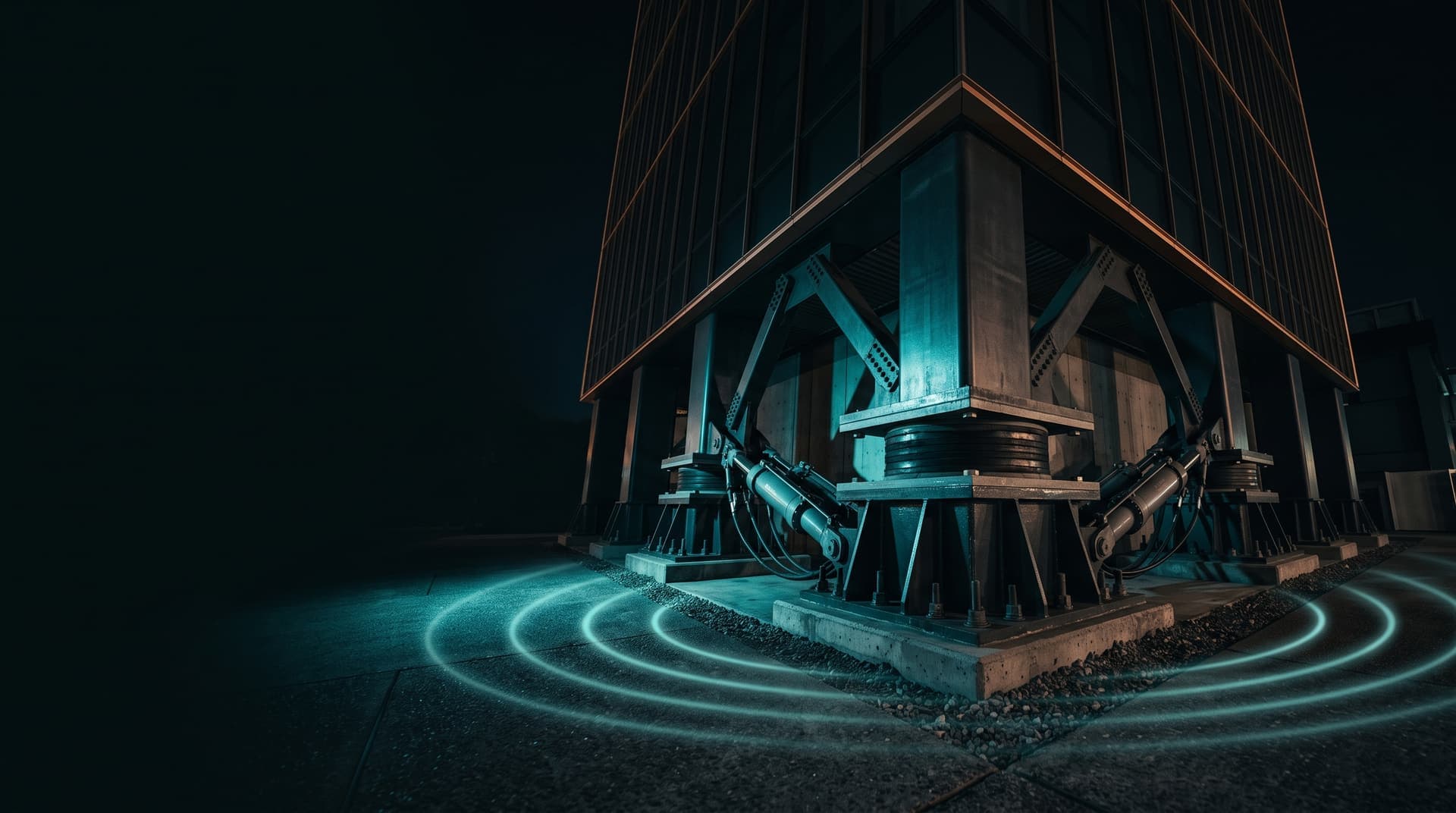
Counter-intuitively, the strongest buildings during an earthquake are often the most flexible. Rigid structures resist seismic forces until they crack. Flexible structures absorb and dissipate energy through controlled movement. Modern earthquake-resistant design uses ductile materials and flexible joints that allow buildings to sway without breaking — much like a tree bending in a storm rather than snapping.
Base Isolation
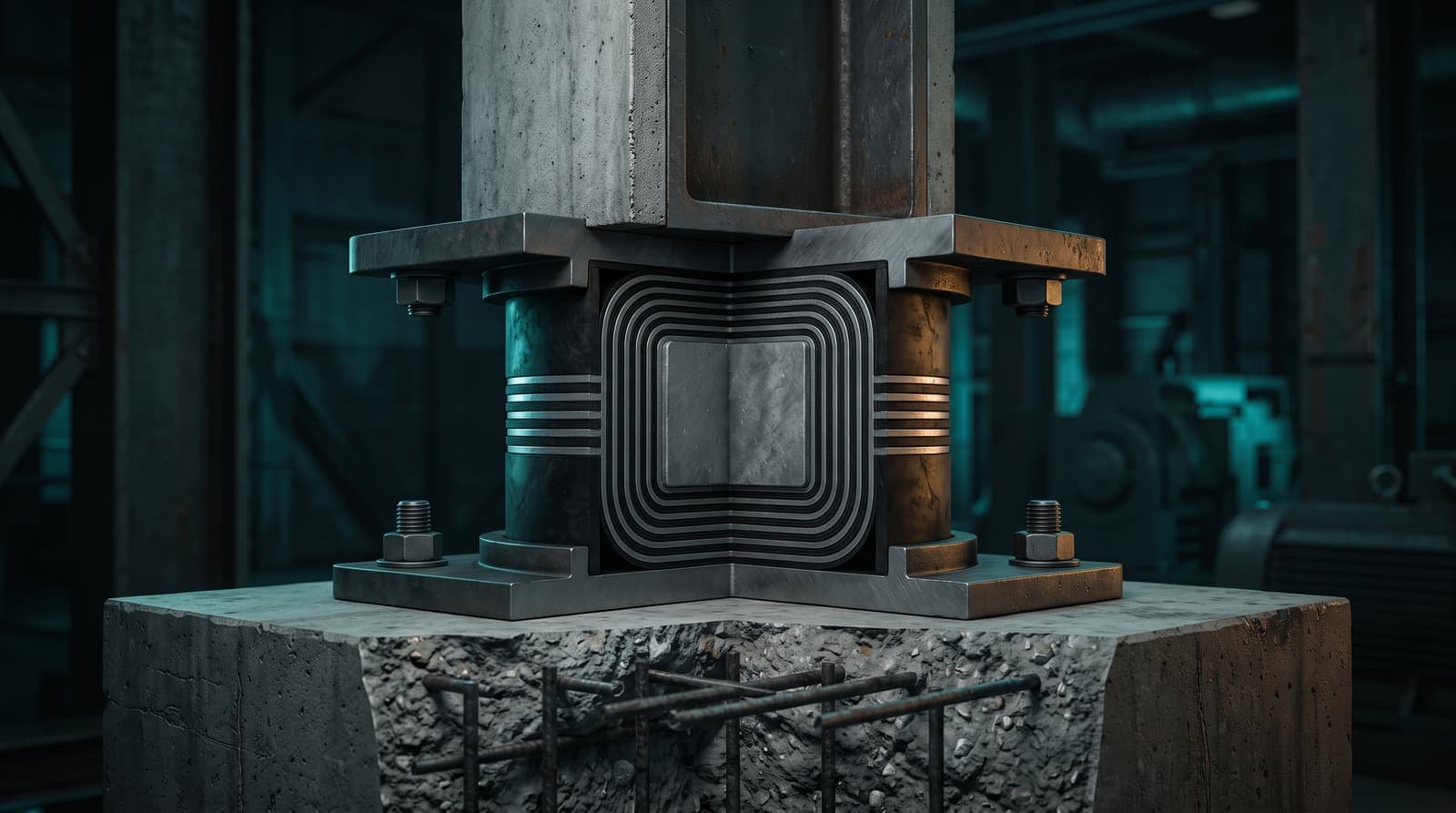
Base isolation is one of the most effective earthquake protection technologies. The building sits on flexible bearings (usually rubber and steel) that decouple the structure from ground motion. During an earthquake, the ground moves but the building remains relatively still. This technology is used in hospitals, data centers, and critical infrastructure worldwide. In India, it's slowly gaining adoption in high-value projects but remains underutilized in residential construction.
Damping Systems
Dampers work like shock absorbers in a car. They convert seismic energy into heat, reducing the amplitude of building oscillations. Viscous dampers, friction dampers, and tuned mass dampers are all proven technologies. Taipei 101, one of the world's tallest buildings, uses a 730-tonne tuned mass damper to withstand both earthquakes and typhoons.
Redundancy in Load Paths
A well-designed earthquake-resistant structure has multiple load paths — so if one structural element fails, others can carry the load. This redundancy prevents progressive collapse, where the failure of one component triggers a chain reaction that brings down the entire structure.
Soil-Structure Interaction
The ground a building sits on dramatically affects how it experiences an earthquake. Soft soil amplifies seismic waves, while bedrock reduces them. Proper geotechnical analysis and foundation design are as important as the structure itself. Liquefaction — where saturated soil behaves like liquid during shaking — is a particular risk in river plains and coastal areas across India.
The Indian Context
India's Bureau of Indian Standards (BIS) has published IS 1893, a seismic design code that classifies the country into four seismic zones. However, enforcement varies widely. In many tier-2 and tier-3 cities, buildings are constructed without engineering oversight, let alone seismic design. Retrofitting existing buildings is expensive but far cheaper than rebuilding after a disaster. The National Building Code provides guidelines, but turning guidelines into widespread practice requires engineering capacity, political will, and public awareness.
The Future: Smart Seismic Systems
The next frontier is structures that actively respond to earthquakes in real time. Smart buildings with embedded sensors and AI-driven actuators could adjust their stiffness and damping characteristics during an earthquake, optimizing their response to the specific seismic event. This isn't theoretical — prototypes exist in Japan and the United States. The technology will become more accessible and affordable over the next decade.

Where TSS Fits In
At TSS, earthquake-resistant design is central to our structural engineering vertical. We're studying how AI can improve seismic risk assessment, how new materials can enhance ductility, and how smart monitoring systems can provide early warning and post-earthquake structural assessment. India doesn't just need more buildings — it needs buildings that will protect their occupants when the ground shakes.
Building for the earthquake that hasn't happened yet.